Lok Sambhashan Research Journal - ISSUES
Archives
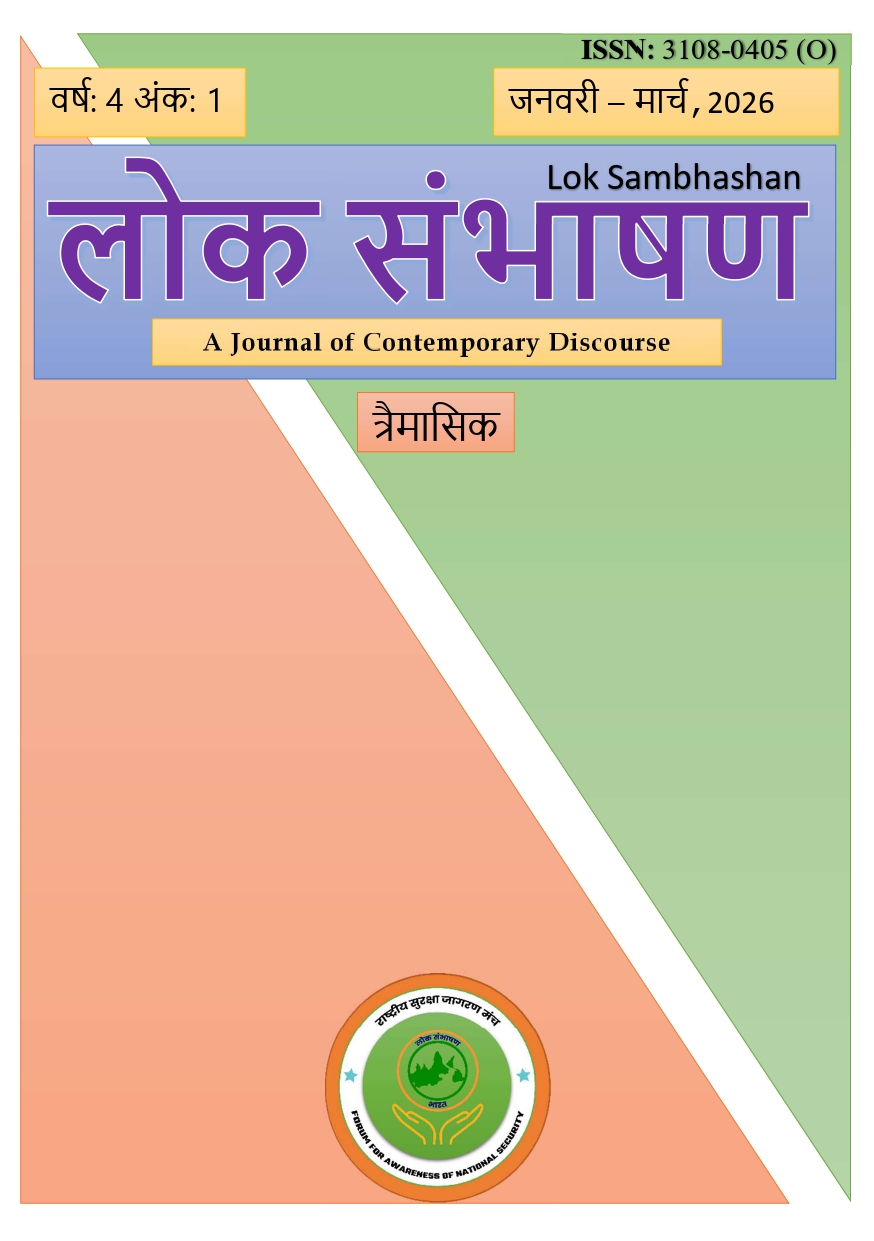
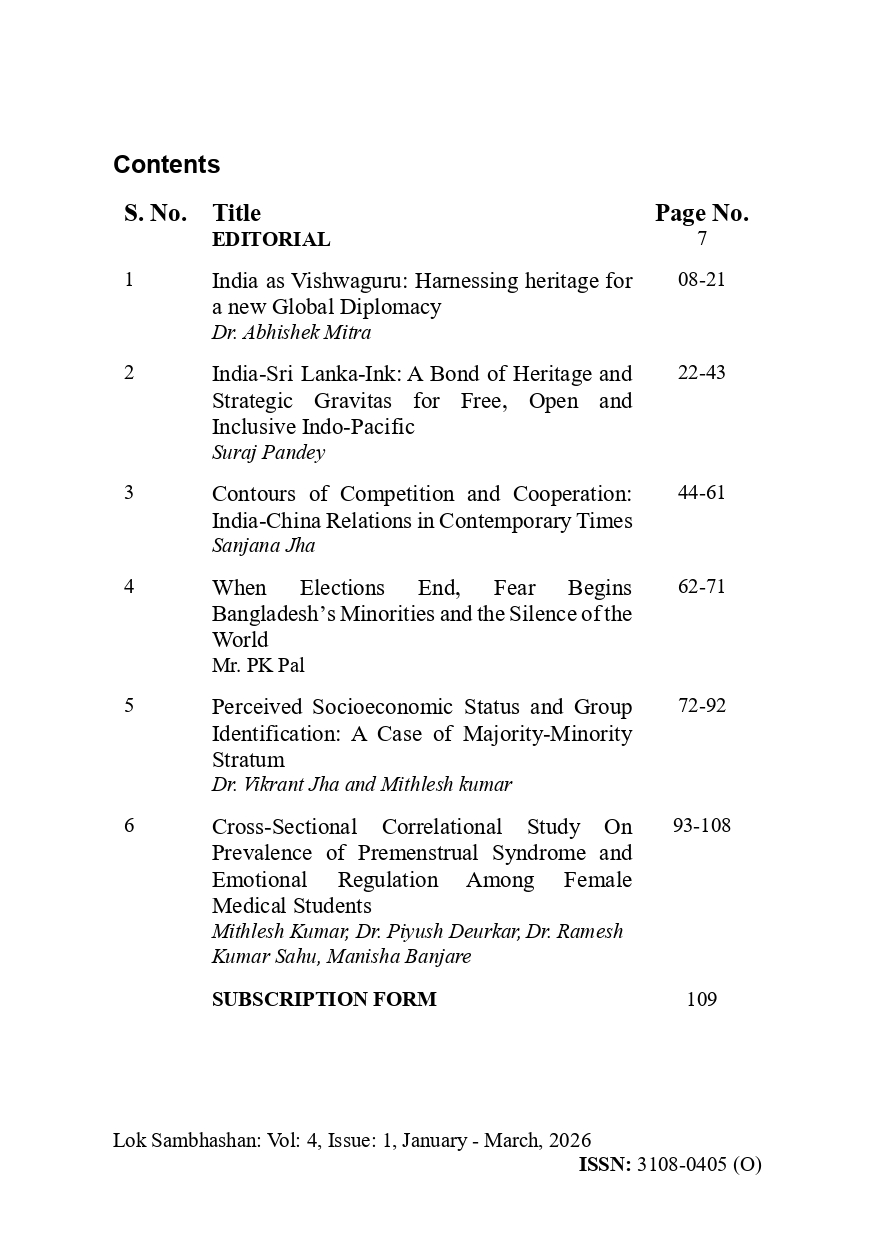
| EDITORIAL PERSPECTIVE: | Page No : 08 |
Abstract:
At the same time, contemporary realities demand a balanced strategy. India’s relations with nations like Sri Lanka illustrate how historical cultural ties can coexist with strategic and economic cooperation despite periodic challenges. Similarly, the evolving dynamics with China highlight the complexities of competition and cooperation in a shifting global order.
Domestically and regionally, issues of minority rights and social cohesion underscore the importance of inclusive governance and human dignity. Social fragmentation, which refers to the division of society into disconnected groups, can weaken unity and public trust if not addressed effectively. Furthermore, environmental crises such as climate change and biodiversity loss demand sustainable policy responses.
India’s future as a global leader lies not merely in power projection, but in harmonizing its heritage with modern policy, ensuring peace, sustainability, and human dignity worldwide.
Dr. Abhishek Mitra
ABSTRACT
Suraj Pandey
ABSTRACT
Sanjana Jha
ABSTRACT
PK Pal
ABSTRACT
Syed Mohd Minhaj
ABSTRACT
Mithlesh Kumar, Dr. Piyush Deurkar, Dr. Ramesh Kumar Sahu, Manisha Banjare*
ABSTRACT
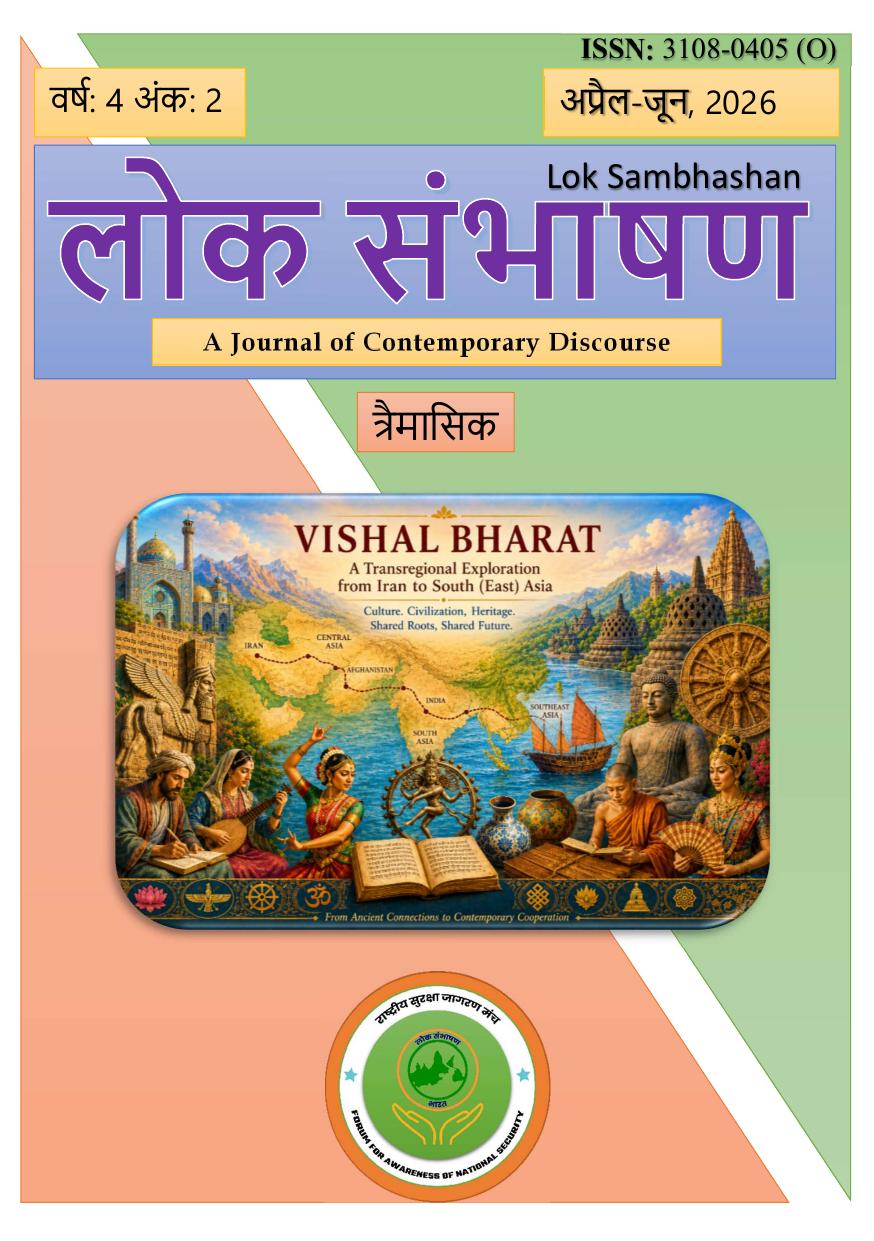
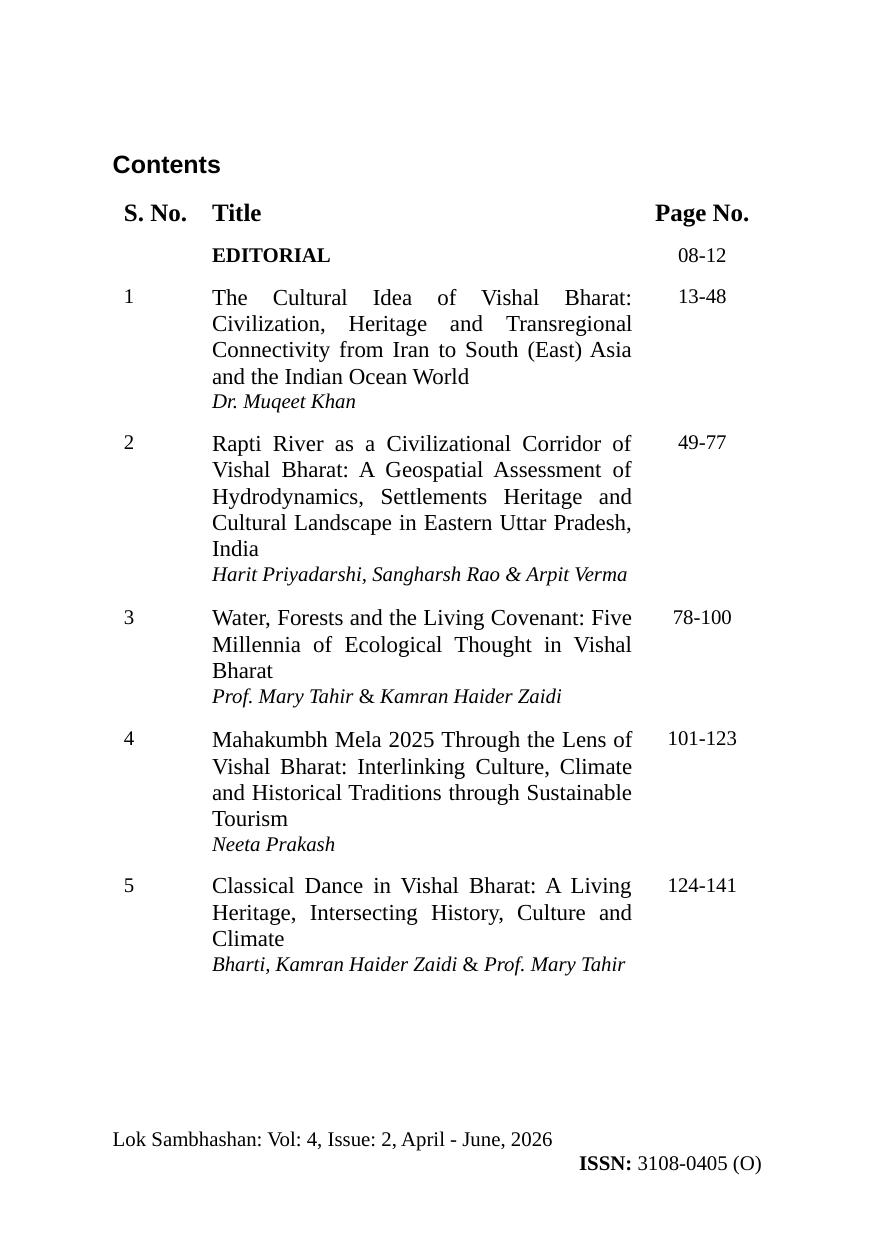
| EDITORIAL PERSPECTIVE: | Page No : 08 |
(Reconnecting with Shared Histories for a Common Future)
Abstract:
This special issue of Lok Sambhashan Journal seeks to revisit these historical linkages and explore their continuing relevance in the contemporary world. At a time when globalization, technological transformation, environmental crises and geopolitical uncertainties are reshaping societies, understanding our shared civilizational heritage offers valuable insights into building a more connected and sustainable future.
Bhartiya civilization has long been guided by the principle that humanity is interconnected. The celebrated verse from the Maha Upanishad reminds us:
अयं निजः परो वेति गणना लघुचेतसाम् ।
उदारचरितानां तु वसुधैव कुटुम्बकम् ॥
"The distinction between 'mine' and 'others' is made by narrow minded people; for the noble, the entire world is one family."
This profound idea was not merely a philosophical ideal but also shaped Bharat's interactions with neighboring societies over centuries. Unlike many historical expansions driven by military conquest, the spread of Bhartiya cultural traditions largely occurred through trade, pilgrimage, scholarship, diplomacy and spiritual exchanges. Sanskrit inscriptions in Cambodia, Hindu-Buddhist monuments in Indonesia, Ramayana traditions in Thailand, Shaivite influences in Vietnam and maritime cultural networks across the Indian Ocean stand as enduring testimony to these deep historical connections.
The concept of Vishal Bharat, therefore, encourages us to view history not as a collection of isolated national narratives but as an interconnected tapestry woven through the movements of merchants, monks, scholars, artisans, travelers and communities. These exchanges fostered remarkable cultural syntheses that found expression in architecture, literature, governance, religion, art and everyday social practices.
The spirit underlying these interactions is beautifully captured in the Rig Vedic prayer:
आ नो भद्राः क्रतवो यन्तु विश्वतः
(Rig Veda 1.89.1)
"Let noble thoughts come to us from all directions."
This openness to ideas, cultures and knowledge remains highly relevant today. Far from being contradictory, diversity and connectivity have historically strengthened one another. The civilizational experience of Vishal Bharat demonstrates how societies can preserve their unique identities while participating in wider networks of exchange and cooperation.
The contributions included in this special issue examine these themes from multiple perspectives. The opening article explores the idea of Vishal Bharat as a transregional cultural sphere extending from Iran to South (East) Asia and the Indian Ocean world. It highlights the historical networks through which ideas, technologies, beliefs and cultural practices travelled across regions and generations.
The volume then turns to the Rapti river, illustrating how river systems have historically functioned as civilizational corridors that shaped settlement patterns, facilitated cultural interactions and nurtured heritage landscapes. Another contribution examines the ecological foundations of civilization by exploring traditional relationships between water, forests and environmental ethics, demonstrating how historical practices of stewardship continue to offer valuable lessons for contemporary sustainability challenges.
The article on the Mahakumbh Mela 2025 presents one of the world's largest gatherings as a remarkable example of the intersection between faith, environmental awareness, cultural continuity and sustainable tourism. The discussion on classical dance traditions further highlights how performing arts preserve collective memory and cultural values while continuously adapting to changing social and environmental contexts.
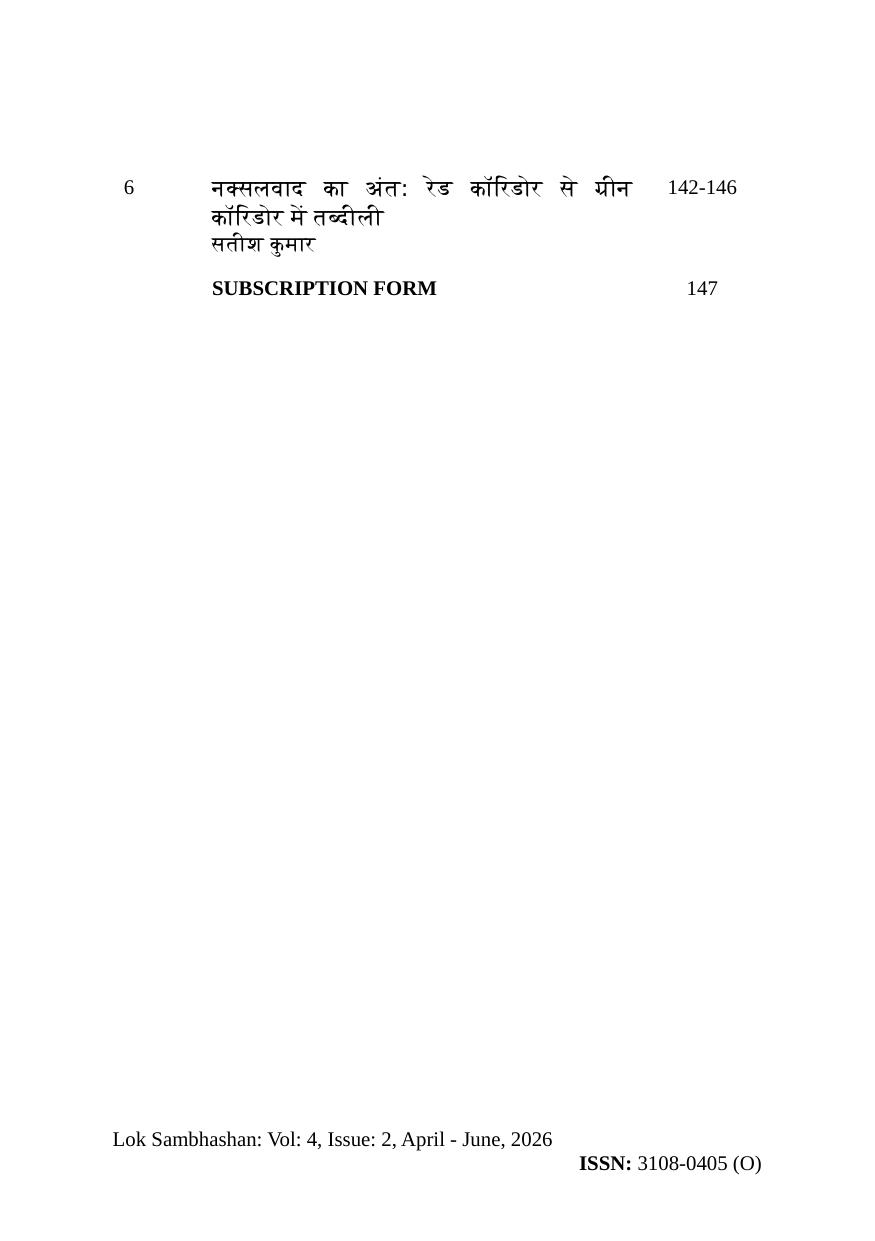
The concluding article explores the transformation of the Red Corridor into a Green Corridor, offering a contemporary perspective on peace building, environmental restoration and inclusive development. Together, these contributions demonstrate that the heritage of Vishal Bharat is not merely a subject of historical inquiry but a living and evolving resource that can help address present day challenges.
One of the most significant lessons emerging from this civilizational heritage concerns humanity's relationship with nature. Contemporary debates on sustainable development and climate resilience increasingly recognize the importance of traditional knowledge systems. Indigenous ecological practices, community based resource management systems and ethical approaches to the environment developed across the broader Bhartiya civilization offer valuable insights for addressing contemporary ecological challenges and environmental crises.
The Atharva Veda expresses this ecological consciousness with remarkable clarity:
माता भूमिः पुत्रोऽहं पृथिव्याः
"The Earth is my mother, and I am her son."
This simple yet profound declaration reflects a worldview in which human beings are part of nature rather than its masters. As the world confronts climate change, biodiversity loss and environmental degradation, such civilizational wisdom acquires renewed importance. The ethos of Vishal Bharat emphasizes harmony, restraint, responsibility and stewardship principles that resonate strongly with contemporary sustainability discourse.
Equally important is the role of cultural memory in shaping collective identities. Heritage is not limited to monuments, manuscripts or archaeological remains. It is a living process through which societies remember, interpret and transmit values across generations. The enduring popularity of the Ramayana, the Mahabharata, Buddhist traditions and countless regional folk narratives across Asia illustrates how shared memories continue to transcend political boundaries and foster lasting cultural bonds.
The Bhagavad Gita reminds us:
कर्मण्येवाधिकारस्ते मा फलेषु कदाचन
(Bhagavad Gita 2.47)
"You have a right to action alone, not to its fruits."
This teaching remains especially relevant for scholars, educators, researchers and policymakers. The preservation of heritage, the pursuit of knowledge and the promotion of intercultural understanding require dedication, patience and sustained effort. Engaging with the past should not be an exercise in nostalgia; rather, it should serve as a means of generating critical insights for addressing contemporary concerns and envisioning future possibilities.
The relevance of Vishal Bharat today extends well beyond historical scholarship. It provides a framework for strengthening cultural diplomacy, encouraging regional cooperation and fostering meaningful people-to-people connections. Shared civilizational heritage can serve as a bridge for dialogue in a world often divided by political tensions and ideological differences. Rediscovering common cultural roots can contribute to mutual respect, trust building and collaborative development across societies.
At the same time, the digital age presents unprecedented opportunities for preserving and disseminating cultural heritage. Digital archives, virtual museums, collaborative research initiatives and transnational academic networks are opening new avenues for engagement with the diverse cultural landscapes associated with Vishal Bharat. Such efforts can strengthen connections among scholars, practitioners and communities while ensuring that this rich heritage remains accessible to future generations.
As we reflect on the themes explored in this volume, the timeless prayer from the Brihadaranyaka Upanishad offers an inspiring conclusion:
असतो मा सद्गमय ।
तमसो मा ज्योतिर्गमय ।
मृत्योर्मा अमृतं गमय ॥
"Lead us from untruth to truth, from darkness to light and from mortality to immortality."
May this special issue contribute to that enduring journey of knowledge, dialogue and understanding. By revisiting our shared civilizational heritage, we hope to encourage meaningful conversations that promote inclusivity, sustainability and cooperation values that are essential for building a more peaceful, interconnected and humane future.
Dr. Muqeet Khan
Dr. Muqeet Khan
ABSTRACT
Harit Priyadarshi, Sangharsh Rao and Arpit Verma
ABSTRACT
Prof. Mary Tahir & Kamran Haider Zaidi
ABSTRACT
Neeta Prakash
ABSTRACT
Bharti, Kamran Haider Zaidi and Prof. Mary Tahir
ABSTRACT